
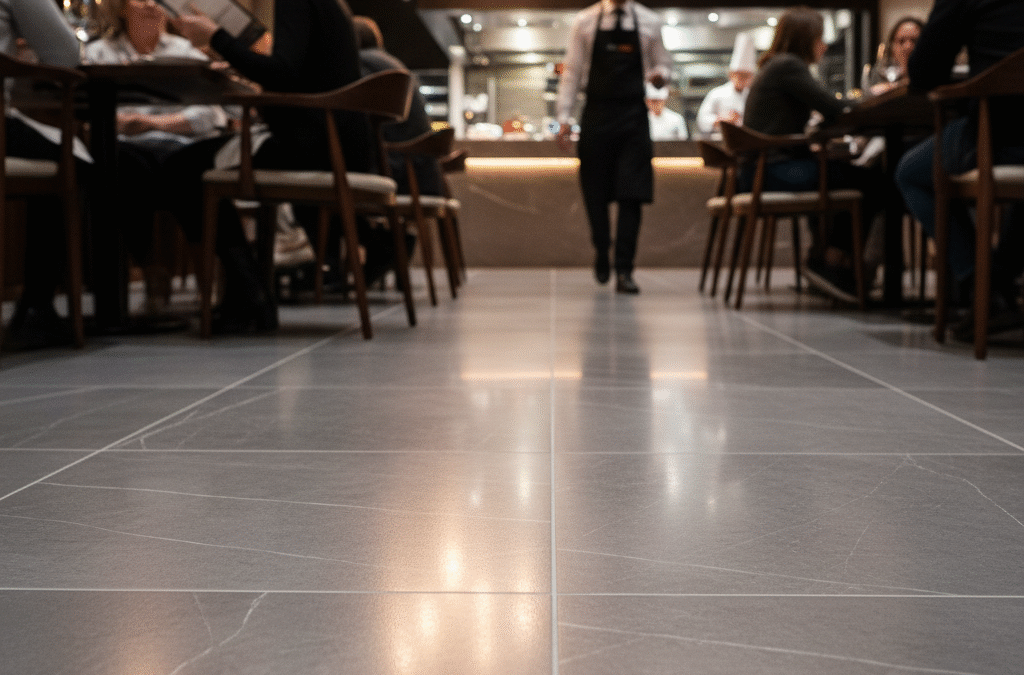
This isn’t your grandmother’s ceramic tile; this is an engineered surface built for performance, efficiency, and exceptional return on investment (ROI) across any scale of project.
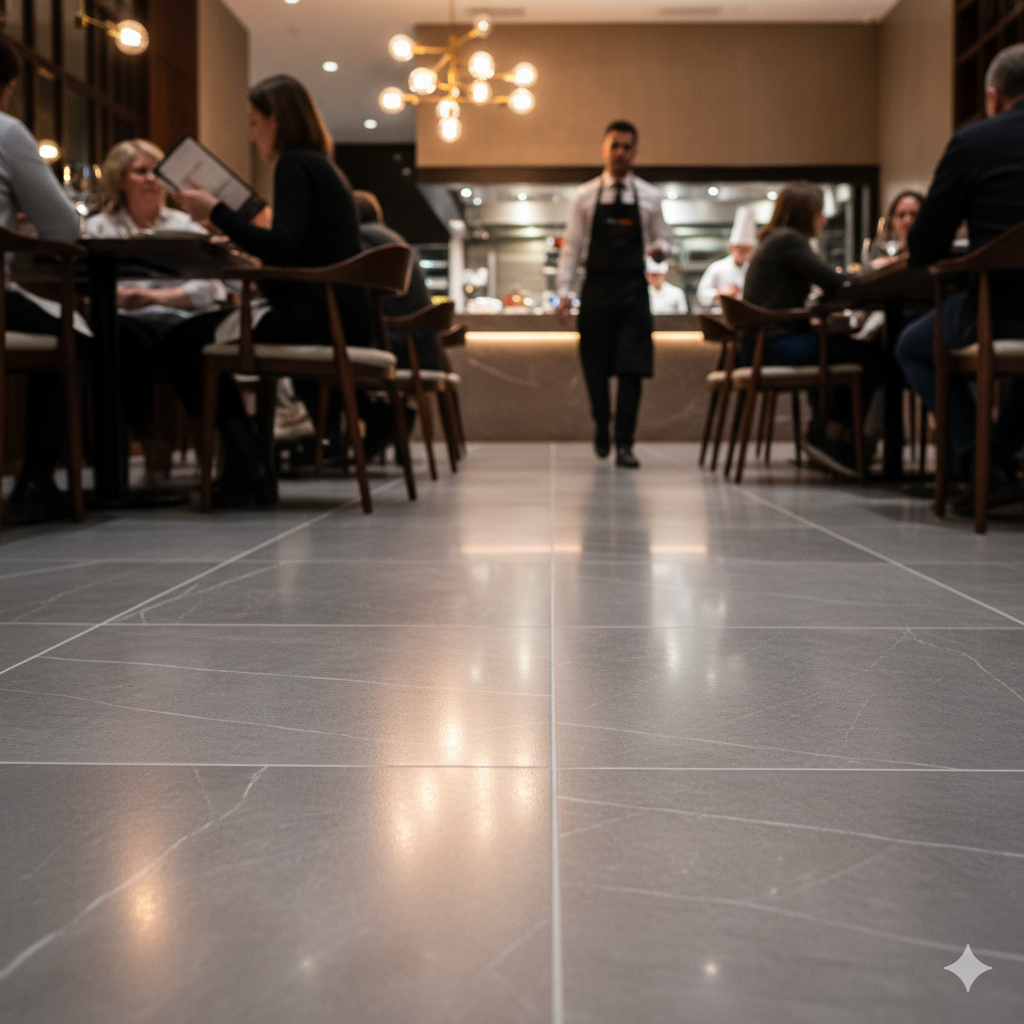
The Non-Negotiable Specification: Water Absorption Rate For B2B audiences, the most critical difference between materials is technical. Standard ceramic tiles have a high porosity, meaning they absorb water. High-density porcelain, however, is fired at immense temperatures (over 1,200∘C) and pressure, resulting in a composition that yields a water absorption rate of less than 0.5%.
This technical factor is the key to porcelain’s superior performance:
Freeze-Thaw Immunity: For international projects in cold climates, low porosity prevents water from seeping in, freezing, and cracking the material. This eliminates a major source of tile failure.
Stain Proofing: Low porosity makes the tile impervious to commercial spills—grease, chemicals, acids, and high foot traffic dirt—making it ideal for commercial kitchens, hospitals, and high-traffic retail.
Reduced Liability: Specifying a waterproof, robust material significantly lowers the risk of costly post-installation call-backs and product failures, protecting the reputation of the construction company and the distributor.
Project Efficiency: Speed and Standardization
In large-scale Projects, time is capital. High-density porcelain streamlines the entire installation process:
Rectified Edges: The best-in-class porcelain tiles are mechanically finished after firing (rectified). This ensures perfect sizing consistency, allowing for minimal grout joint spacing (1−2mm). Fewer, smaller grout lines mean faster installation and a sleeker, almost monolithic appearance—the look of Premium quality delivered with project efficiency.
Color Consistency: Unlike natural stone, which varies wildly from slab to slab, manufactured porcelain guarantees batch-to-batch color uniformity. This eliminates the logistical headache of sorting and matching materials on massive construction sites, ensuring the final aesthetic is precisely what the architect specified.
Heavy-Duty Style : Built to Last
The 20mm Advantage: For exterior applications, 20mm thick porcelain pavers offer installation versatility. They can be dry-laid over grass, gravel, or existing concrete, or installed on raised pedestal systems. This bypasses traditional, time-consuming mortar applications, drastically speeding up the completion of terraces and rooftop decks.
Broad Application Scope
A single line of high-quality porcelain can be sold for floors, walls, interior spaces, and exterior applications. This simplifies your inventory management and allows you to capture sales across multiple market segments (Economy, Premium, and Projects).
Higher Margin Security
By offering a product with verifiable technical specifications and proven longevity, you are selling a long-term solution, not just a commodity. This justifies a secure, higher margin and builds trust with demanding B2B clientele.