

WPC Decking vs. Natural Wood: A Comprehensive Comparison for Maximizing Outdoor Project ROI
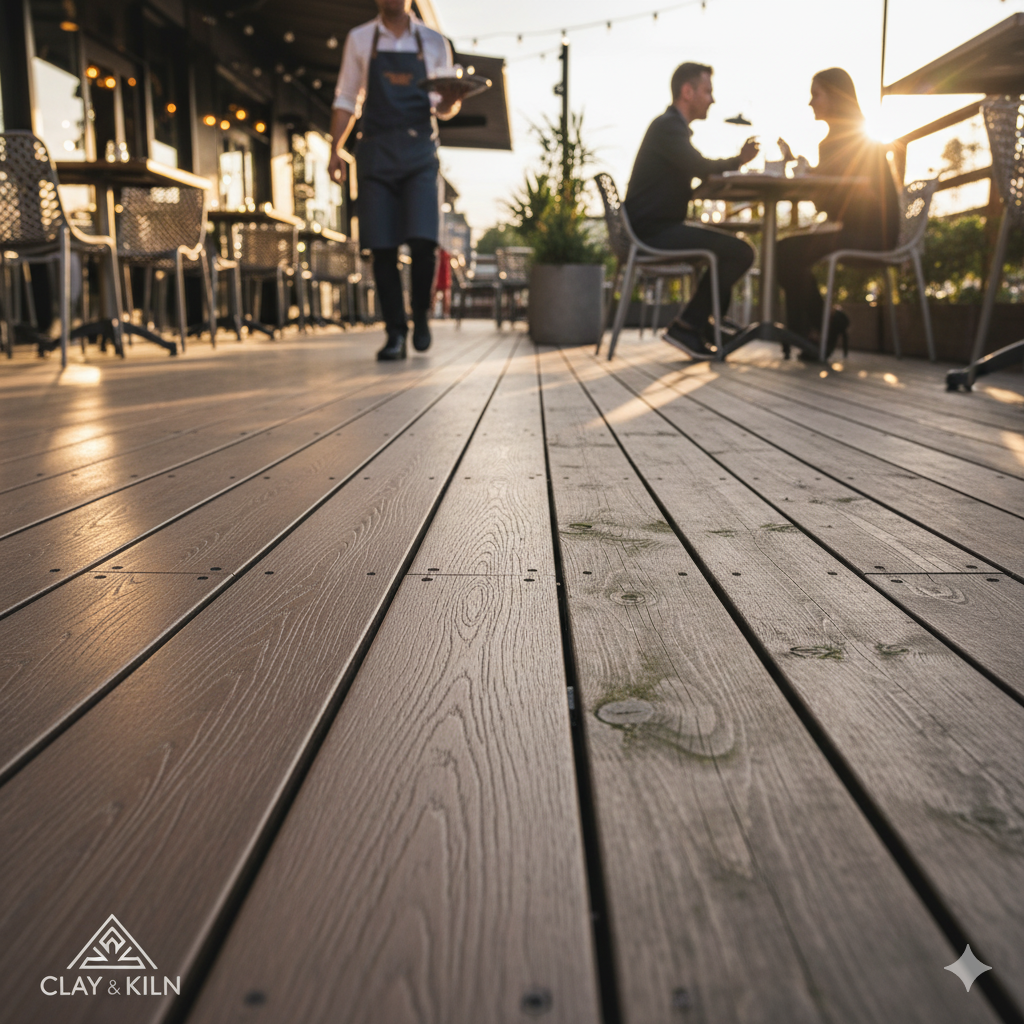
For construction companies, developers, and global specifiers managing large outdoor Projects, the choice of decking material is a critical determinant of budget, timeline, and long-term client satisfaction. While natural wood has its traditional appeal, Wood Plastic Composite (WPC) decking offers a technologically superior alternative that consistently delivers a higher Return on Investment (ROI) over the project lifecycle.
Eliminating Long-Term Maintenance Costs
One of the greatest financial drains in facility management is recurring maintenance. Natural wood requires annual cleaning, sanding, staining, or sealing, leading to significant recurring labor and material costs. In stark contrast, WPC Decking requires only periodic soap-and-water cleaning. This zero maintenance requirement is a key selling point for property developers and investors, as it dramatically reduces facility operating expenses and enhances the asset’s long-term value.
Superior Durability and Pest Immunity
Durability is non-negotiable for large-scale outdoor projects exposed to diverse global climates. Natural wood is highly susceptible to rot, warping, splintering, and infestation by insects like termites and borers. WPC decking, however, is impervious to moisture, fungal decay, and all common wood-destroying insects. This robust composition guards against premature failure, eliminating the risk of expensive call-backs and premature replacement which can seriously damage the reputation of the construction firm.
Accelerating Installation Efficiency
In any large Project, time is a capital cost. Natural wood requires time-consuming pre-drilling to prevent splitting, careful alignment of irregular boards, and visible fasteners. WPC decking is engineered with consistent dimensions and utilizes hidden clip systems. This standardized, precise product ensures a faster, streamlined installation process, directly reducing labor hours on the job site and helping to accelerate overall project delivery schedules.
Ensuring Material Consistency and Quality Control
When procuring materials for multi-phase projects, material consistency is vital. Natural wood exhibits high variability in color, grain, and quality across different batches, leading to potential sorting waste and aesthetic inconsistency. WPC is manufactured to provide uniform color and texture across the entire project run. This simplifies procurement for wholesalers and ensures the quality control department can easily verify the aesthetic matches the architect’s specification from the first board to the last.
Meeting Global Safety and Compliance Standards
Safety and compliance are top-tier concerns. Natural wood is highly flammable unless it is chemically treated, which can pose significant compliance issues in specific zones, such as high-rise balconies or public venues. WPC decking generally exhibits better fire resistance and lower flame spread ratings, making it a safer material that is often necessary to meet stringent global safety regulations. This expanded compliance directly benefits wholesalers by broadening the markets they can serve.
Actionable Conclusion for Specifiers
For project managers and global distributors, specifying WPC decking is a strategic decision. It allows you to offer a product with predictable, long-term performance that mitigates risk, accelerates timelines, and cuts the long-term maintenance cost to near zero—delivering a compelling financial and engineering advantage for any outdoor development.